
Whole school working practices and ethos
Whole school working practices and ethos
When whole school working practices encompass these values and practices, it promotes the emotional wellbeing of the adults and children and young people. A whole school ethos prioritising emotional wellbeing will be supportive for those experiencing barriers to attendance.
A whole school ethos needs to start with...

- A committed and inclusive senior management team;
- Clear policies on supporting attendance, emotional well-being and transition which are followed and understood by all staff;
- Clear roles within the pastoral, attendance and special needs and disabilities (SEND) teams with these staff work collaboratively together to provide a joined up approach. There is a clear lead in school for promoting emotional wellbeing and a positive approach to supporting attendance;
- Support for children and young people being offered through an Assess, Plan, Do, Review approach and Gloucestershire’s graduated pathway of support;
- All staff being aware of approaches and strategies to promote the emotional wellbeing of all students as well as any specific approaches to support children and young people experiencing barriers to attendance.
A whole school approach should ensure that...
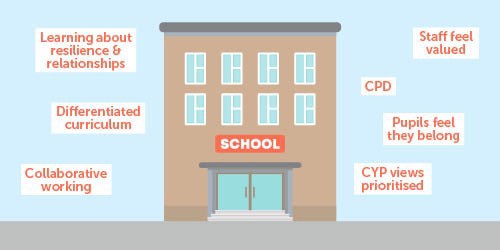
- All staff in school feel valued and supported. There are clear protocols for emotional support including supervision;
- Continuous professional development is mandatory for all staff which promotes the ethos that emotional wellbeing is important for everyone and is everyone’s responsibility;
- Value is placed on promoting the emotional wellbeing of all pupils and ensuring that they feel a sense of belonging within the school community;
- Children and young people’s views are valued and embedded within the culture of school; a holistic approach is taken to supporting and understanding children and young people’s needs;
- The importance of working collaboratively within school, with parents and carers as well as with external agencies is recognised and prioritised;
- The curriculum includes sessions on promoting resilience and interpersonal relationship skills;
- The curriculum is appropriately differentiated according to the needs of all children and young people.
"I think every teacher, whether they are pastoral or teachers, needs to have an education on young people's mental health, especially seeing as conditions are rising and COVID has not helped young people have good mental health. I think that that's definitely something that needs to change" (young person).
"They don't seem to know about mental health; they just kind of treat it as if it's not spoken about" (young person).
“We trained up a lot of staff who were going to be working with these families in structured conversations. The staff that were going out and meeting with these parents were working with them and listening to them and listening to them more, I think that's helped” (school staff).
Last reviewed: