
Emotional literacy
Emotional literacy
Emotional literacy is the term used to describe the ability to understand and express feelings. It involves having self-awareness and recognition of feelings and knowing how to manage them.
Some young people may experience heightened levels of uncomfortable emotions which impact on their functioning and school experiences.This can include feelings of anxiety and / or low mood.
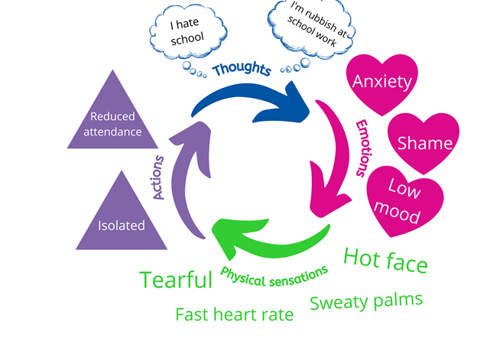
See the process in action in the following examples:
The student thinks “this work is getting too hard” which leads to the student feeling worried which might make their heart race and lead to them avoiding school
The student thinks “why am I different to others?” which leads to the student feeling confused which might make them feel tearful and lead to them missing lessons
Then I would get angry and run out because it was the only thing that I felt that I could do. It was very much a fear response it was I need to get out of here (young person).
“We talk about anger, give it a name, and point parents in the right direction” (school staff).
That was quite a challenging response because it made me feel like I was the problem. But only now that I've come somewhere where they're more aware of mental health, I realised I wasn't a problem. I should have been held, not punished, for being like... for having something that I can't control (young person).
"He didn’t want to be in trouble with school but he just couldn’t go, and so that would be a worry; it’s just that vicious circle all the time” (parent).
Last reviewed: