
Push and pull factors associated with non-attendance
Push and pull factors
The difficulties children and young people may have articulating their thoughts and feelings around school, as well as the challenges adults may have in understanding the child or young person's emotional experiences of school, are often key barriers in identifying and supporting those at risk of not attending school.
Barriers to attending school can become more pronounced for young people who are of secondary school age, due to exam pressures and systemic factors occurring around adolescence. Transitions can also contribute to difficulties, for example, starting school, transitioning to secondary school and transitioning from Key Stage 3 into Key Stage 4.
Barriers to attending school can include feelings of isolation, a lack of belonging, not feeling listened to, a sense of helplessness and lack of control. By not attending school, a child or young person may feel that they are able to protect their 'sense of self' by avoiding conflict, rejection and/or social isolation.
Push and pull factors
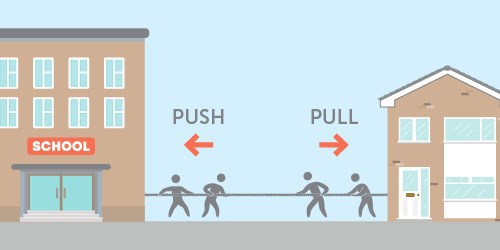
The concepts of risk and resilience can also be considered in terms of push and pull factors.
- A ‘Push’ factor 'pushes' the child or young person towards attending school.
- A ‘Pull’ factor 'pulls' the child or young person away from attending school
Difficulties attending school are likely to occur when the child or young person's perceived risk factors are greater than their perceived resilience factors. Barriers may become evident when the child or young person's feelings of stress and anxiety exceed feelings of being supported; when the ‘pull’ factors that promote non-attendance overwhelm the ‘push’ factors that encourage school attendance.
Because I had missed so much I got bullied even more, which affected my mental health more (young person).
“[It is important to] ensure that parents and the young person are aware that supporting adults acknowledge that the low mood is there and that it is acting as the barrier” (multiagency professional).
“So, he kind of feels like school is torture, really, a lot of the time” (parent).
Last reviewed: