Tell us what you think of Families in Partnership
We would be grateful to learn from what you think of the Families in Partnership newsletter – this minute-long survey will help us improve the newsletter for the community 👉

Celebrating the launch of Gloucestershire’s Assistive Technology Lending Library
Published
The Specialist Teaching and Educational Pyschology Service has launched its Assistive Technology Lending Library pilot, enabling local schools to explore and trial a range of devices supporting children and young people. Louise Brill, SEND Operations Manager at Gloucestershire County Council, explains that the pilot runs until mid-May and is receiving positive feedback. Outcomes will be shared in July 2026 as the impact on learning and inclusion is evaluated.

We are delighted to share the successful launch of Gloucestershire’s Assistive Technology Lending Library pilot on 27 March. The event brought together representatives from 26 pilot schools, colleagues from the Specialist Teaching and Educational Psychology Service (STEPS) and members of the wider Education team, for an inspiring day filled with exploration and hands‑on learning.
Assistive technology in education refers to a wide range of tools, devices, software, and services designed to help students with special educational needs and disabilities (SEND) access learning, participate fully in classroom and online activities, and achieve academic success. Its purpose is to remove barriers to learning, promote independence, and ensure equitable access to education for students with physical, cognitive, sensory, or learning needs. Examples include alternative keyboards, speech recognition and communication devices, screen readers and Braille displays, text‑to‑speech and reading support programmes, mobility and seating aids, and can include emerging technologies such as AI and robotics.
Eight assistive technology partners showcased a wide range of innovative devices and applications now available to schools through the lending library. Attendees had the opportunity to try out equipment, ask questions, and hear how these tools can support children and young people with their learning and communication. Many schools were even able to take equipment away on the day, enabling immediate use.
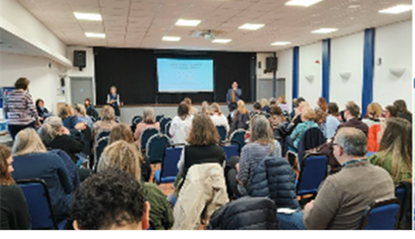
Feedback from schools has been fantastic. One school representative summed up the positive mood.
“This is such an exciting pilot. I learned so much about products I thought I knew, as well as new ones. I can’t wait to start using it!”
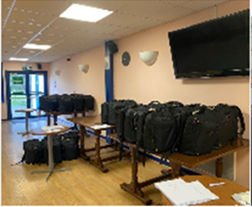
The pilot will continue until mid-May, giving schools time to trial the technology with children and young people in real learning environments. We look forward to sharing the outcomes of the pilot in July 2026 and celebrating the positive impact this work is already beginning to create.