Should I worry about my child being online? 😟

Using digital technology and online spaces can support children to achieve their educational milestones and form social connections. For lots of children and young people, time spent online can be good for their wellbeing and development.

Like many other life skills, children need to learn to use digital technology safely and in a way that doesn’t harm their health or wellbeing. Support and engagement from parents and carers is key to achieving this.


The 4Cs of online safety

It is important to recognise that being online is not always a positive experience. Children can be exposed to situations, people, or content that can cause them harm, which are commonly described as the ‘4Cs’ of online safety:
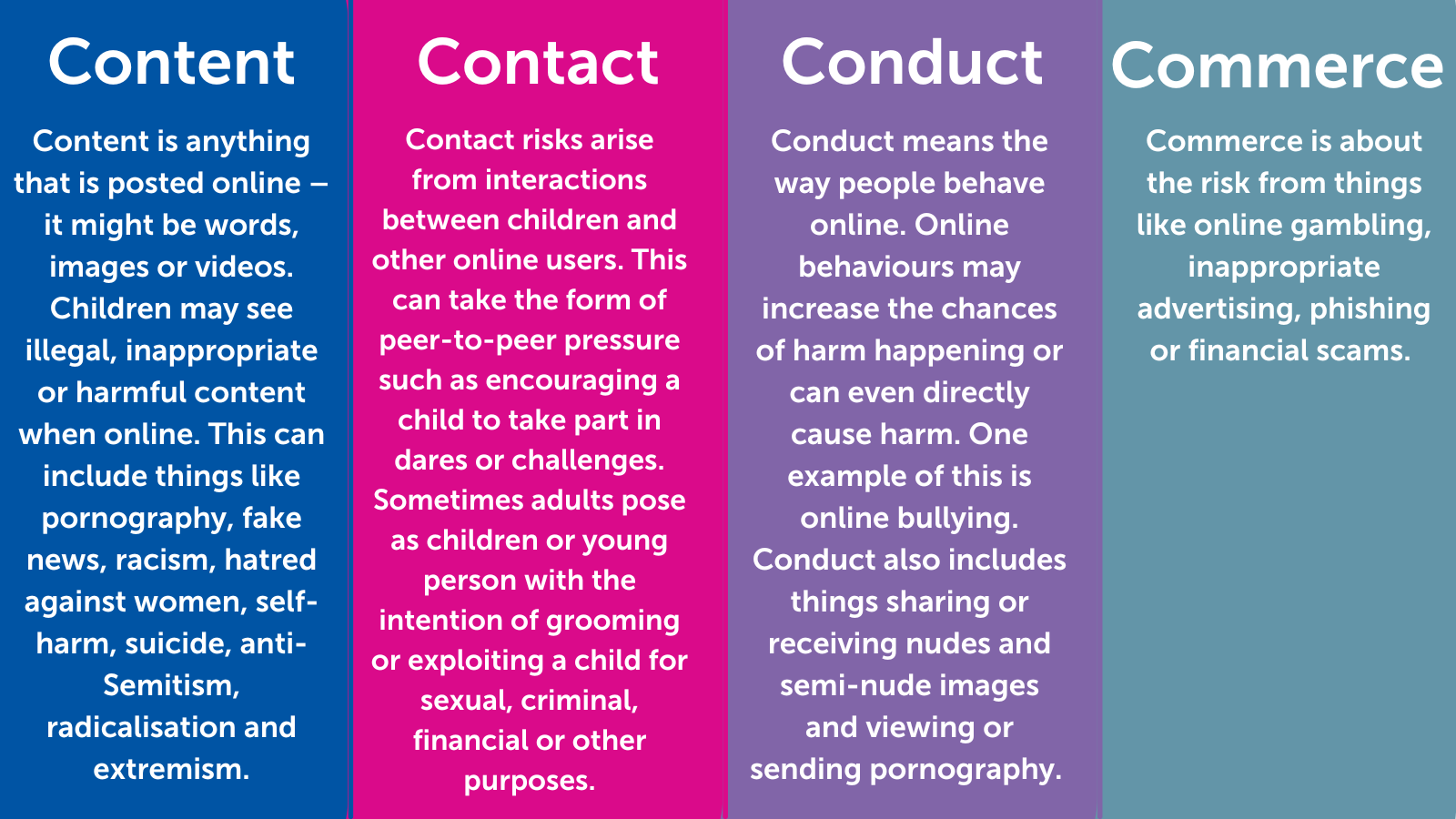
Content is anything that is posted online – it might be words, images or videos. Children may see illegal, inappropriate or harmful content when online. This can include things like pornography, fake news, racism, hatred against women, self-harm, suicide, anti-Semitism, radicalisation and extremism. Contact risks arise from interactions between children and other online users. This can take the form of peer-to-peer pressure such as encouraging a child to take part in dares or challenges. Sometimes adults pose as children or young person with the intention of grooming or exploiting a child for sexual, criminal, financial or other purposes. Conduct means the way people behave online. Online behaviours may increase the chances of harm happening or can even directly cause harm. One example of this is online bullying. Conduct also includes things sharing or receiving nudes and semi-nude images and viewing or sending pornography. Commerce is about the risk from things like online gambling, inappropriate advertising, phishing or financial scams.

There are a number of themes that cut across all 4 Cs:

  • Privacy and data protection abuses
  • Risks to physical and mental health
  • Forms of discrimination

More information about different risks that children and young people may face online can be found on the Childnet website.