
Introduction
Gloucestershire has a population of 646,627, living within the two urban centres of Gloucester and Cheltenham and the many market towns and rural villages, covered by six district authorities. Children aged 0-17 make up 20% of the population and a further 7% are aged 18-24 years.
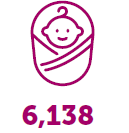 new births in 2021, although the number of births fluctuates over time, the general trend is starting to decline.
The proportion of children living in child poverty generally fall below England averages, however rates have been increasing over time in line with the national trend, with a sharp increase observed in 2022.
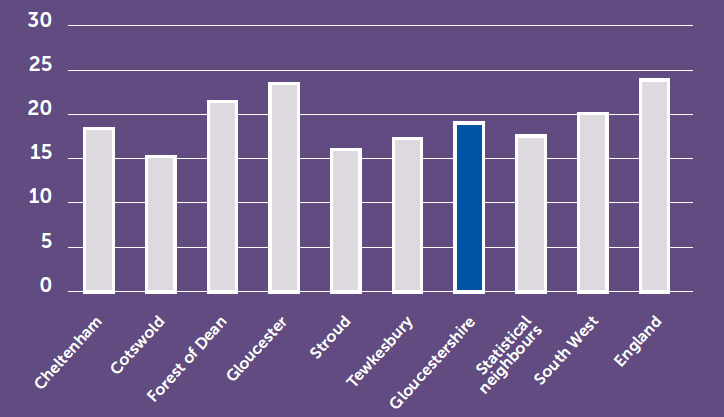
Proportion of primary pupils eligible for free school meals 2023
Children that go to school in Gloucestershire generally perform similar or better than England overall in their assessments at the end of their Reception year, Key Stage 2 and Key Stage 4. However inequalities exist, with the gap in performance between those eligible for Free School Meals and those not, consistently being greater for Gloucestershire than England as a whole.
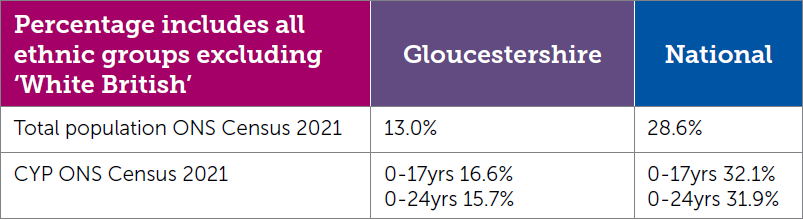
Gloucestershire’s population is becoming more ethnically diverse, although it is less diverse than England as a whole:
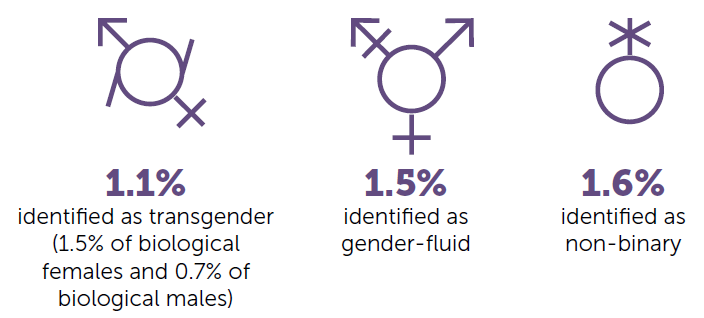
Our Pupil Wellbeing Survey found that 70.1% of young people identified themselves as heterosexual, which has reduced over time. In 2022 we asked pupils about their gender identity for the first time:
Last reviewed: