
Special Educational Needs and Disabilities (SEND)
The number of children and young people in Gloucestershire identified with a Special Educational Need or Disability (SEND) has been increasing since 2015 in line with national trends.
This has been driven by a combination of increased need, awareness, diagnosis, training, and changes to policy. In January 2023 there were:
- 12,569 children with SEN supported in schools
- 5,295 of these are children with an Education Health and Care Plan (EHCP)
- 525 of these are children with a complex disability
This rise has coincided with a rise in Education Health and Care Needs Assessment applications, appeals to the needs assessment outcome and a rise in demand for special school places.
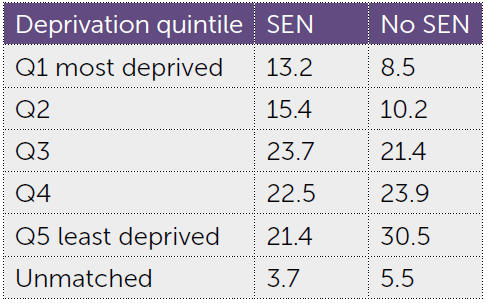
Overall Special Educational Needs are more common in children living in more deprived areas, a pattern seen locally and nationally, though there is variation depending on primary need. Children and young people with a primary need of Moderate Learning Disability; Social, Emotional and Mental Health; and Speech, Language and Communication Needs are significantly more likely to live in areas of deprivation (quintiles 1 and 2) than children without Special Educational Needs.
Last reviewed: